
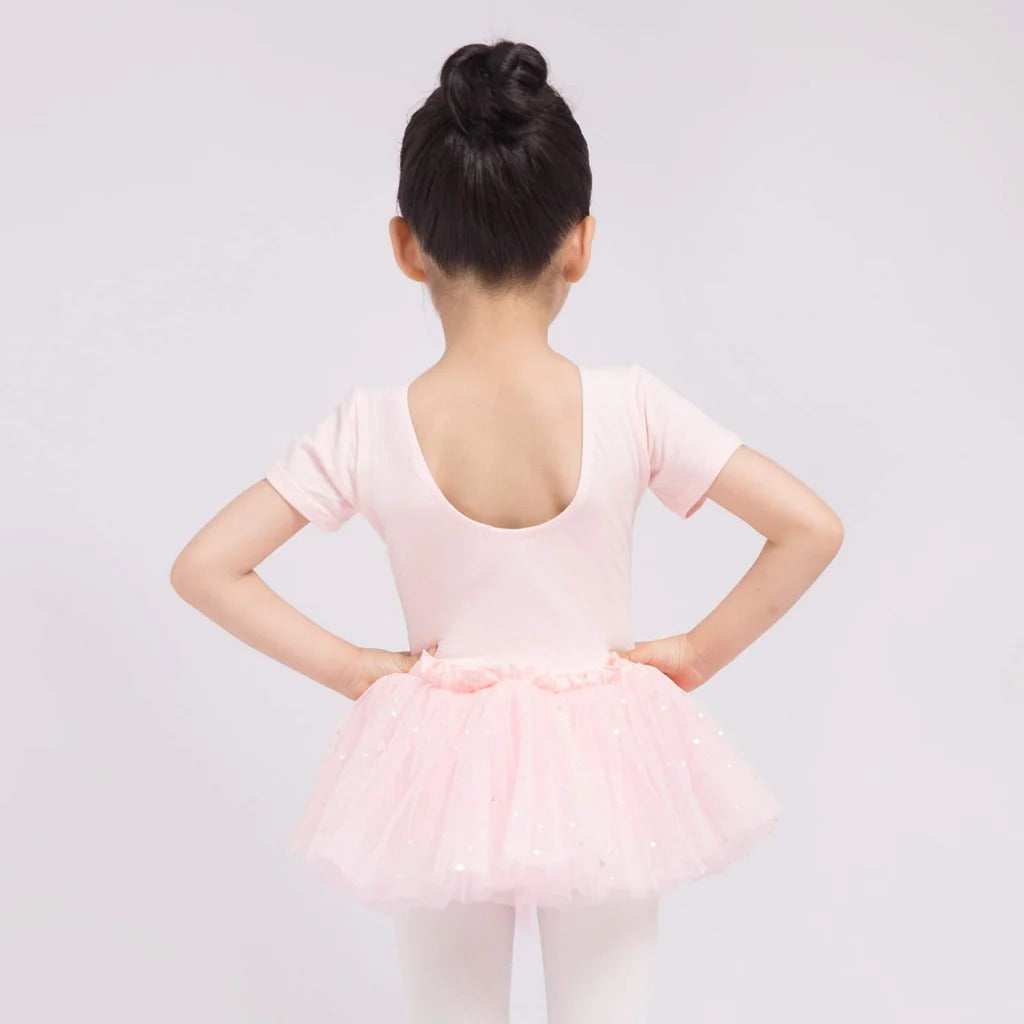
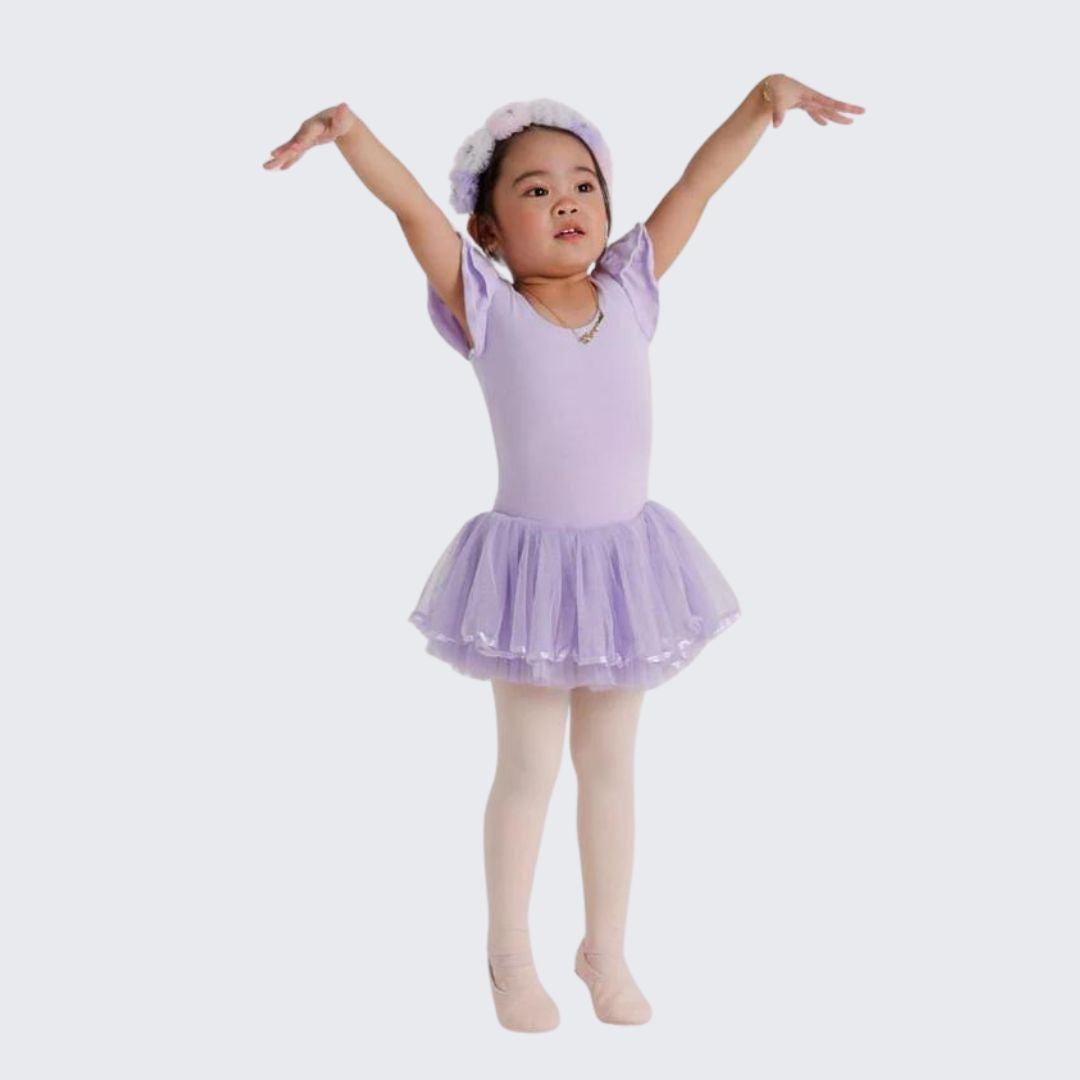
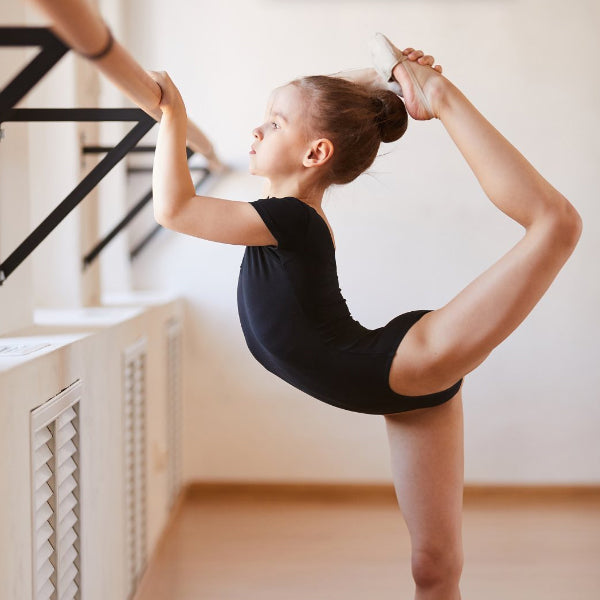

long sleeve leotard vs short sleeve leotard for big girls
Choosing between a long sleeve leotard vs short sleeve leotard for big girls starts with fit, not sleeve length. For your little one, the right choice should allow comfortable arm movement, gentle torso support, and enough room through the upper arm without digging at the armhole.
Key Takeaways
- I always tell parents to settle the fit question first, because a well-fitted leotard in either sleeve length will outperform a poorly fitted one every time.
- Season and studio temperature play a big role, since long sleeves keep dancers cozy in cooler months while short sleeves allow airflow during warm-weather classes.
- Ask your dancer to raise both arms overhead when trying on a leotard, because the fabric should stay in place without riding up or pinching at the shoulder.
- Short sleeve styles often make an easier transition for girls who are sensitive to fabric on their arms, while long sleeves can feel like a comforting layer for older dancers.
- Whichever length you choose, look for soft, stretchy seams that move with your child rather than against her.
Check four details first: girth, sleeve construction, fabric weight, and studio temperature. A fuller figure may need more room through the bust, waist, hips, or biceps while still needing a secure fit. These checks make dancewear sizing less confusing.
How We Evaluated Long Sleeve vs Short Sleeve Leotards for Big Girls
This comparison considers reaching, stretching, floor work, turns, and overhead movements. The armhole should sit close without pinching, and the sleeve should follow the upper arm without leaving a tight band around the bicep. A sleeve cap with enough height can reduce shoulder pulling, while a well-graded armhole can help keep the bodice in place.
Girth received special attention because dancewear sizing measures from one shoulder, through the torso, and back up again. Retailer sizing information indicates that girth accounts for more than 80 percent of sizing discrepancies across dancewear brands. Street size alone may not predict comfort. Bust coverage, sports bra visibility, waist placement, and fabric movement also matter.
Studio temperature matters too. Studio warmups can raise body temperature within 10 minutes, according to the research brief, so breathability belongs in sleeve selection. A light, flexible long sleeve may suit a cool studio, while warmer fabric can feel heavy during energetic combinations. Check the dress code for sleeve length, color, neckline, and coverage before class.
Long Sleeve Leotards: Fit, Comfort, and Coverage for Curvy Dancers

Long sleeves provide coverage through the upper arm and shoulder. They may help your little one feel more comfortable with a fitted bodice when bust or sports bra coverage matters. The best fit leaves room for the bicep while keeping the cuff from sliding toward the wrist. Ask your little one to raise both arms. Wrinkles running from the underarm toward the neckline can signal limited armhole room or a short torso.
Movement freedom depends on the whole garment. A long sleeve leotard with sufficient girth should rest smoothly across the bust, waist, and seat. Short girth may tug at the shoulders and make the sleeves feel tight, even when the arm measurement seems correct. Choose breathable stretch fabric and a soft neckline. Heavy material may retain too much heat during jumps, traveling steps, and repeated combinations.
For a long sleeve leotard vs short sleeve leotard for big girls, consider the studio before choosing extra coverage. A cool room, modesty preference, or dress code may favor long sleeves. A warm room and high-intensity class may call for lighter fabric. The goal is a secure fit that lets your little one feel comfortable while learning.
The pictures on our blog are created using artificial intelligence to bring our learning content to life. We hope they make reading more engaging.
Short Sleeve Leotards: Mobility, Fit Challenges, and Comfort for Bigger Arms
Short sleeves can feel light and flexible during reaching, port de bras, floor work, and quick combinations. The sleeve opening should rest smoothly around the upper arm rather than forming a tight band. Check the armhole too. Digging, bodice movement, or red marks after class can indicate limited armhole circumference or insufficient girth, not necessarily a need to size up by street clothing standards.
A good short sleeve fit leaves bicep room while keeping the shoulder seam in place. Ask your little one to lift both arms, bend the elbows, and reach across the body. Watch for sleeve riding, fabric twisting, shoulder pulling, and bust tension. A higher sleeve cap changes movement over the shoulder. Poor grading in extended sizes may leave the sleeve hem roomy while the armhole remains restrictive.
Short sleeves cover the shoulder and upper arm, yet may show a sports bra edge more readily than long sleeves. Check the neckline, back opening, and studio dress code. A wider strap or higher back can provide a neater fit beneath the leotard when permitted. Your little one should not need to adjust straps during combinations.
Temperature also guides a long sleeve leotard vs short sleeve leotard for big girls decision. Studio warmups can raise body temperature within 10 minutes, so breathable stretch fabric may feel better during energetic classes. Short sleeves suit warm rooms, vigorous rehearsals, and removable warmup layers. In a cooler studio, your little one may prefer more coverage before movement begins.
Practical Guide: Measuring Girth and Upper Arm for the Best Sleeve Fit
Use a soft cloth tape measure, keeping it level without pulling tight. Your little one should stand naturally in a thin layer of clothing. Do not substitute a usual shirt size for a dancewear measurement. The same child may wear one street size and need another leotard size because dancewear stretches over the full torso.
- Measure girth. Start at the top of one shoulder. Bring the tape down through the fullest part of the torso, between the legs, and back to the starting shoulder. Keep it close to the body while allowing normal breathing.
- Measure the upper arm. Wrap the tape around the fullest part of the relaxed bicep without pressing it into the skin.
- Check the size chart. Compare girth first, then upper arm, bust, waist, and hip measurements. Retailer sizing research gathered for this comparison says girth accounts for more than 80 percent of discrepancies across dancewear brands.
- Review the garment details. Look for sleeve opening, armhole circumference, sleeve cap construction, fabric stretch, and return guidance. A size change may not solve a cut that is narrow through the armhole.
After the leotard arrives, repeat the movement test. Your little one should reach overhead, open both arms, bend the elbows, and sit or stretch without the bodice riding upward. Girth and upper-arm measurements give a clearer starting point than age labels alone.
Comparison Table and FAQs: Choosing Between Long and Short Sleeve Leotards for Big Girls
The best choice depends on your little one’s measurements, movement, and studio routine. Girth guides the size decision, while upper-arm circumference and armhole construction help determine comfort. Long sleeves provide more coverage and warmth; short sleeves may feel lighter during energetic classes. Neither should pinch, pull across the shoulders, or shift the bodice.
| Fit and comfort factor | Long sleeve | Short sleeve |
|---|---|---|
| Arm mobility | Allows full movement when the sleeve cap and armhole have enough room. | Feels light through the forearm, but a tight sleeve opening may bind a fuller bicep. |
| Heat and breathability | Offers more coverage and warmth. Lightweight, breathable fabric suits active classes. | Usually feels cooler in warm studios or during fast combinations. |
| Upper-arm coverage | Provides continuous coverage from shoulder to wrist. | Covers the shoulder and part of the upper arm while leaving more skin exposed. |
| Sports bra coverage | Can offer more overall coverage, depending on neckline and back design. | Requires a close match between bra straps, neckline, and back opening. |
| Studio dress code | May suit classes requiring sleeves or additional coverage. | May suit studios that allow shorter sleeves and lighter practice clothing. |
For future purchases, record girth and upper-arm measurements rather than relying on the last street size, and recheck them as your little one grows. Fabric weight, stretch recovery, neckline height, and laundering instructions can affect daily comfort. If the studio changes from technique work to high-intensity rehearsal, reassess breathability and layering. The right sleeve length lets your little one move freely, stay appropriately covered, and feel comfortable throughout class.
Frequently Asked Questions
What are some good dance leotards for plus-size girls?
Dance leotards for plus-size girls should offer enough girth, bust room, waist room, and upper-arm space for easy movement. Long sleeve styles provide more upper-arm coverage, while short sleeve styles may feel lighter in warm studios. Check the armholes, sleeve edges, neckline, and fabric stretch before choosing a size.
What leotard style is most flattering for a big girl?
The most flattering leotard style for a big girl is one that fits smoothly across the torso and allows natural movement. A higher neckline, supportive bodice, and well-placed seams can provide comfortable coverage, while long or short sleeves depend on arm comfort and studio temperature. Fit matters more than sleeve length.
What are some good leotards for larger ladies?
Leotards for larger ladies should be selected by girth and upper-arm measurements rather than street size alone. Stretch fabric, a well-graded armhole, and enough room through the bust, waist, hips, and biceps help the garment stay in place. Always compare measurements with the brand’s size chart before ordering.
What size leotard should a 13-year-old girl wear?
A 13-year-old girl should wear the leotard size that matches her girth, bust, waist, hips, and upper-arm measurements. Age and street clothing size are only starting points because dancewear sizing varies by brand. Measure from one shoulder through the torso and back to the starting shoulder for the best fit.
What size does a 12 to 13-year-old girl wear in a leotard?
A 12 to 13-year-old girl may wear a youth or adult leotard size, depending on her measurements and the brand’s chart. Girth is especially useful because a short garment can pull at the shoulders and make sleeves feel tight. Check armhole comfort, bicep room, and torso coverage during movement.
Should a big girl choose a long sleeve or short sleeve leotard?
A big girl should choose a long sleeve leotard for extra upper-arm coverage or a cool studio, and a short sleeve leotard for lighter coverage in a warm studio. Both styles should allow overhead reaches, bending, and floor work without digging. Look for breathable stretch fabric and a sleeve opening that does not squeeze the arm.
How can I tell if a leotard fits my child’s upper arms?
A leotard fits a child’s upper arms when the sleeve edge lies flat without squeezing, slipping, or leaving deep marks. Place two fingers between the sleeve edge and upper arm, then ask your child to reach overhead and across the body. Watch for armhole digging, sleeve riding, shoulder pulling, or fabric twisting.
