


what do pediatricians recommend for baby's first Christmas outfit
If you are wondering what do pediatricians recommend for baby's first Christmas outfit, start with safety and comfort rather than a formal holiday look. I recommend soft, breathable clothing that fits well, allows easy movement, and does not include loose decorations. Your little one can look festive while still staying comfortable during cuddles, feeding, naps, and family photos.
Key Takeaways
- Choose soft, breathable fabrics that let your baby move easily during cuddles and family photos.
- Avoid outfits with loose buttons or decorations that could become choking hazards.
- Pick a festive look that works for naps and feeding without extra fuss or discomfort.
- Remember that safety and comfort come first over a formal holiday appearance.
The best holiday outfit is usually one your little one can wear for a short celebration, then change into simple sleepwear before resting. A pretty outfit should never replace safe sleep clothing or make it harder to notice overheating, skin irritation, or breathing discomfort.
Pediatrician-Approved Essentials for Baby's First Christmas Outfit
Pediatric guidance favors a well-fitting outfit made from comfortable, breathable fabric, with no loose parts, tight bands, long ties, or bulky layers. The American Academy of Pediatrics advises that infants generally need only one more clothing layer than an adult in the same indoor setting. Check your little one's chest or back for warmth instead of relying on cold hands and feet alone. Remove extra layers if the skin feels hot, damp, or flushed.
For sleep, choose clothing designed for sleep rather than a decorative Christmas dress, romper, or costume. The American Academy of Pediatrics identifies overheating as a risk factor for Sudden Infant Death Syndrome, so holiday clothing should come off before your little one naps or goes down for the night. A festive outfit is best treated as temporary clothing for awake, supervised time.
Infant Holiday Safety Checklist
- Choose a close but comfortable fit, with room for normal movement.
- Check that the neckline, cuffs, waistband, and leg openings do not pinch.
- Skip hoods, scarves, long ties, and cords during active play or sleep.
- Inspect snaps, seams, fasteners, and decorations before dressing your little one.
- Keep a spare outfit nearby for spit-up, drool, or a diaper leak.
- Change out of holiday clothing before unsupervised sleep.
Decoding Fabrics and Festive Features: What to Look For (and Avoid)

Newborn and infant skin can react to rough textures, dyes, heat, and rubbing. Soft cotton is a practical choice because it allows airflow and feels gentle against the skin. Bamboo fabric can also feel smooth and breathable. Look for a washable material with flat seams, printed labels, and minimal finishing. Wash the outfit before the celebration with a fragrance-free detergent, especially if your little one has eczema, dry skin, or a history of contact irritation.
Be cautious with scratchy tulle, stiff lace, glitter, vinyl prints, and heavy synthetic fabric. These materials may trap warmth or rub the neck, wrists, thighs, and diaper area. A decorative layer should never touch sensitive skin for long periods if it causes redness or fussiness. Check every button, bead, sequin, snap, and appliqué by hand. The Consumer Product Safety Commission treats small detachable parts as choking hazards for children under age 3, including loose buttons and embellishments under 1.25 inches in diameter. Avoid necklaces, tie-on accessories, and anything your little one can pull free or place in the mouth.
The Practicalities of Festivity: Diaper Changes, Mobility, and Photo Ops
A holiday outfit should make caregiving easier, not turn every diaper change into a long interruption. Choose a design with a wide opening, secure snaps, or a two-way zipper that lets you reach the diaper area quickly. Test the fasteners before the gathering. They should close smoothly and stay flat against the skin. Keep a simple backup outfit, wipes, diapers, and a changing pad within reach. A spit-up spot or diaper leak is common, so a washable outfit often serves your little one better than a delicate piece that cannot handle frequent changes.
Movement also deserves attention. Your little one may roll, kick, crawl, or practice sitting during the celebration. Long skirts can gather beneath the knees, stiff waistbands can restrict bending, and loose fabric can become tangled around small legs. For active babies, a soft one-piece outfit or a top with flexible bottoms usually allows easier floor play. Check that leg openings do not leave marks and that the neckline stays in place during turning and tummy time. Dress your little one for the activity planned, not only for the family photograph.
| Outfit feature | Helpful for holiday care | What to check before dressing |
|---|---|---|
| Snap crotch | Provides direct access for a diaper change while keeping the upper body covered. | Confirm that snaps close securely and do not press into the diaper area. |
| Two-way zipper | Allows the lower section to open without removing the entire outfit. | Look for a covered zipper guard and smooth movement along the track. |
| Short, flexible layers | Support rolling, sitting, crawling, and being held. | Watch for bunching behind the knees, tight cuffs, or fabric around the feet. |
| Decorative dress or skirt | Can create a festive look for brief, supervised photographs. | Keep the length clear of the face, hands, knees, and changing surface. |
For photographs, use a short window instead of expecting your little one to remain dressed for hours. Feed, change, and let your little one settle before taking a few pictures. Keep the setting familiar, and have a trusted adult watch for tugging, sweating, flushed skin, or signs of tiredness. Remove the outfit if your little one becomes fussy or uncomfortable. The American Academy of Pediatrics recommends clothing designed for sleep once rest begins, so change out of festive clothing before a nap or nighttime sleep.
Holiday Comfort: Layering and Transitioning for Temperature Safety
If you are still asking what do pediatricians recommend for baby's first Christmas outfit during a busy gathering, think in simple, adjustable layers. The American Academy of Pediatrics advises that infants generally need one more clothing layer than an adult in the same indoor setting. That does not mean adding thick, bulky pieces. Start with a breathable base layer, add one light garment, and check your little one's chest or back during the visit. Warm hands and feet do not always show your little one's core temperature accurately.
Holiday homes can shift from cool entryways to warm rooms filled with relatives, cooking, lights, and movement. Remove a layer when your little one's skin feels hot, damp, or flushed. Fussiness, sweating, unusually warm skin, and damp hair can signal that clothing is too heavy. If your little one feels cool across the chest or back, add one lightweight layer and check again after a few minutes. Avoid covering the head indoors unless a pediatrician has advised it for a specific reason.
| Indoor setting | Practical clothing plan | What to monitor |
|---|---|---|
| Cool room or entryway | Breathable base layer with one soft outer layer | Cool chest, pale skin, or persistent fussiness |
| Warm gathering room | One light layer more than an adult would wear | Warm neck, damp fabric, flushed cheeks, or sweating |
| Before a nap or bedtime | Change into fitted sleepwear made for rest | Remove decorative layers, blankets, and head coverings |
Travel needs a separate safety check. Never place your little one in a car seat while wearing a puffy coat or bulky snowsuit beneath the harness. Thick outerwear can compress during a collision and leave the straps too loose. Dress your little one in thin layers, secure the harness snugly against the clothing, and place a blanket over the harness after buckling if extra warmth is needed. On arrival, remove the blanket indoors and reassess the clothing before joining the celebration.
The American Academy of Pediatrics identifies overheating as a risk factor for Sudden Infant Death Syndrome, so a festive outfit should come off before unsupervised sleep. A short, supervised celebration can still feel special. The safest choice is clothing that adjusts easily as the room, travel conditions, and your little one's activity change.
Frequently Asked Questions
What is a good first Christmas outfit for a newborn baby?
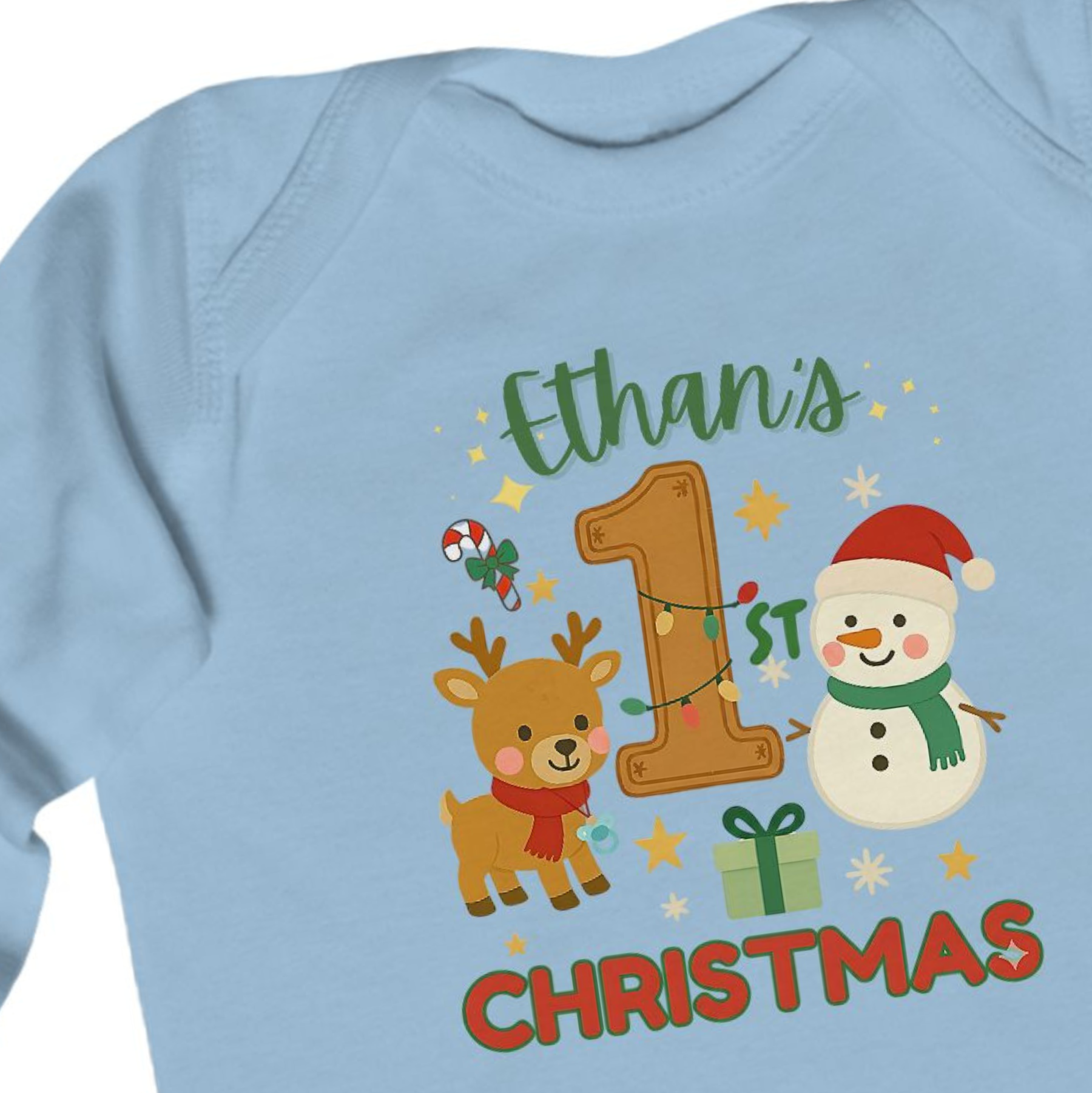
A good first Christmas outfit for a newborn baby is a soft, breathable, well-fitting one-piece outfit with secure fasteners. Cotton or bamboo can feel gentle against sensitive skin, while simple designs make diaper changes easier. Skip loose decorations, long ties, scratchy fabrics, and bulky layers. Change the baby into sleepwear before a nap or bedtime.
What should I get my baby for their first Christmas?
A useful first Christmas gift for a baby is a comfortable, washable outfit paired with practical items such as soft sleepwear, bibs, or burp cloths. Choose fabrics that feel gentle on the skin and avoid small detachable parts. A spare outfit also helps with spit-up, drool, and diaper leaks during holiday visits.
What is a good Christmas outfit for a newborn baby?
A good Christmas outfit for a newborn baby is a festive but simple romper, sleeper, or soft one-piece with easy diaper access. The outfit should allow free movement and fit without tight cuffs or waistbands. Use decorative dresses or costumes only for brief, supervised photos, then change the baby into clothing made for sleep.
What should I do with my baby's first Christmas clothes?
Your baby's first Christmas clothes can be washed, dried, and stored in a clean, labeled box as a keepsake. Remove stains promptly and check that decorations remain secure before saving the outfit. If the clothing is still in good condition, you can also pass it to a younger child or donate it.
What is a good first Christmas outfit for a baby girl?
A good first Christmas outfit for a baby girl is a soft dress, romper, or one-piece that fits comfortably and allows easy movement. Keep skirts short enough to stay away from the face, hands, and legs, and avoid scratchy trim or loose embellishments. Choose a simpler sleep outfit for naps and nighttime.
