

gymnastics leotards teens
Finding gymnastics leotards teens can wear comfortably starts with fit, not decoration. A leo that rides up during floor work, pulls at the shoulders, or gaps at the back can distract your little one from her routine. I’m Andrea Schiffer, founder of Dancina, and I recommend checking torso length, girth, stretch, and coverage before choosing a size.
Key Takeaways
- Fit matters more than frills when picking a gymnastics leotard for your teen.
- Check the torso length and girth first to prevent the leo from riding up or pulling.
- Look for stretch fabric that moves with your child and avoids back gaps during routines.
- Coverage should give her confidence to focus on skills, not constant adjustments.
- Test the shoulder straps and leg openings for snugness without digging in.
Teen proportions can change quickly. A taller frame may need more length even when the chest and hips match a smaller size chart. Use measurements, movement checks, and your gym’s dress code together. Those simple steps can help your little one feel secure during practice and competition.
Why Gymnastics Leotards for Teens Need Special Attention
Teen leotards need special attention because a growing gymnast may have a longer torso, fuller coverage needs, and different comfort preferences than a younger child. A suitable gymnast leo should lie flat at the neckline, stay in place through a bridge, and allow full shoulder movement without pinching. If the fabric pulls down at the shoulders or creeps upward during tumbling, the issue may be torso length rather than width.
Ride-up often appears during floor routines when the body length is too short or the leg openings are too snug. Gaping can signal excess room through the torso, while tightness across the shoulders can point to insufficient length. Look for four-way stretch fabric that moves in every direction. A fabric containing roughly 15 to 20 percent spandex is commonly used to help maintain stretch during dynamic movement. The seams should recover after stretching instead of twisting or pressing into the skin.
Mastering the Fit: Solving Teen Leotard Sizing Puzzles

Torso girth is often the most useful measurement for a gymnast leo. It follows the body from the shoulder, through the legs, and back to the starting shoulder. This loop shows whether the garment has enough length for a taller frame. Chest, waist, and hip measurements still matter, but they cannot explain every ride-up problem by themselves.
How to Measure Torso Girth
- Have your little one stand upright in a fitted shirt and bare feet.
- Place the tape at the top of one shoulder, near the point where a leo strap rests.
- Guide it down the front, through the legs, and up the back to the same shoulder.
- Keep the tape close to the body without pulling it tight or allowing it to sag.
- Record the measurement, then check the seller’s chart for torso length and girth.
Teen Leotard Fit Diagnostic Checklist
- Rides up: Check torso girth and leg-opening tension before sizing wider.
- Shoulders pull: Look for a longer torso option rather than simply moving up in width.
- Back gaps: Check whether the torso is too long or the back design has excess room.
- Neckline shifts: Test arm raises and backbends to identify strap or neckline movement.
- Seams twist: Inspect stretch recovery and confirm that the garment is not undersized.
Measure again if your little one has grown since the last fitting. A slightly roomier garment can still fail if it is short through the body, so compare every measurement with the chart. Good fit develops from careful checking, slowly and steadily, rather than guessing from age alone.
Coverage, Comfort, and Confidence: What to Wear Underneath
Underwear for a teen gymnast should provide coverage without shifting, pinching, or showing through the leo. Start with the gym’s dress code, then ask your little one what feels secure during jumps, turns, handstands, and floor routines. A well-fitting sports bra can offer support for a developing chest, while a smooth, close-fitting brief can help reduce visible lines. Choose pieces that stay flat beneath the fabric and do not add bulk around the waist, leg openings, or straps.
For modesty, match the underlayer to the leo’s color or select a shade that the gym permits. A high-neck design may make a sports bra neckline less noticeable. Wider straps can feel more stable, but they should remain fully covered during arm movements. If straps appear during a routine, try a racerback style or adjust the leo’s fit rather than relying on pins or bulky clips. Period protection also deserves a practice check. Your little one may prefer period underwear, a slim liner, or another approved option that stays smooth and does not bunch during movement.
| Need | What to look for | Movement check |
|---|---|---|
| Light chest support | Soft, close-fitting sports bra with covered seams | Raise both arms and bend forward. The band should remain level. |
| Extra coverage | Low-profile brief or approved period underwear | Complete a straddle and tuck jump. Fabric should stay flat. |
| Minimal visible lines | Smooth edges and fabric with enough stretch for movement | Check the seat and leg openings after a bridge or roll. |
| Sensitive skin | Soft, breathable textile and covered elastic | Look for red marks or rubbing after several minutes of activity. |
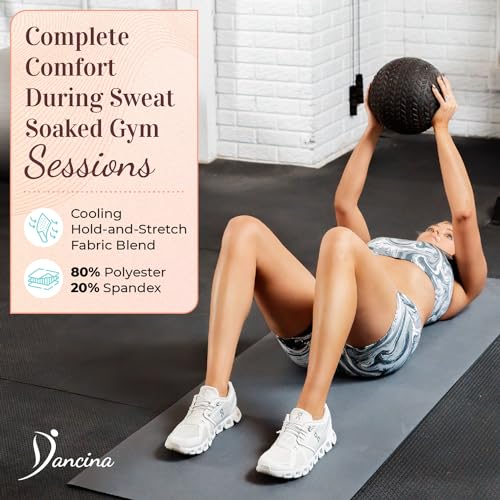
Fabric matters beneath the outer garment, too. Moisture-moving materials can feel more comfortable during a long practice, while cotton may feel soft but hold more sweat. Avoid rough lace, thick seams, loose elastic, and stiff edges. Test every underlayer with the actual leo before a meet. The Marble Line Gymnastics Leotards for Girls with Matching Shorts - Aqua & Gold Set can be checked with the intended undergarment so coverage, strap placement, and comfort work together. The Marble Line Gymnastics Leotards for Girls with Matching Shorts - Aqua & Gold Set should allow your little one to move freely while her chosen base layer stays discreet.
Keeping Leotards in Great Shape & Gym Bag Ready
Good care helps a gymnast leo keep its stretch, shape, and fit through regular practice. Check the care label first. In most cases, wash the leotard soon after practice in cool water with a mild detergent. Turn it inside out, place it in a mesh laundry bag, and keep it away from rough zippers or hook-and-loop fasteners. Skip bleach, fabric softener, and harsh stain removers. They can weaken elastic and affect the finish of performance fabric.
Air-dry the garment flat or on a wide hanger away from direct heat. A dryer, radiator, or hot car can damage spandex and cause the fabric to lose recovery. Do not wring or twist wet material. Press out extra water with a clean towel instead. Rhinestones and metallic details need gentle handling. If a small repair is needed, choose an adhesive made for stretch textiles, such as Fabri-Fuse, and test it on an unseen area first. Stiff glue can crack when the garment stretches.
Gym Bag Care Checklist
- Pack the leotard in a breathable pouch rather than leaving it loose with shoes.
- Carry a small plastic bag for damp clothing after practice.
- Keep a permitted underlayer, hair ties, and a spare pair of socks together.
- Bring a clean towel for quick changes and changing-room privacy.
- Check team colors, sleeve rules, and coverage requirements before meet day.
Remove a damp leo from the gym bag as soon as your little one arrives home. Letting sweat sit against the fabric can leave odor and make stains harder to remove. Inspect stitching, straps, leg openings, and closures once a week. Early repairs cost less than replacing a competition garment after a seam fails. For growing gymnasts, reserve expensive meet wear for approved events when possible, and use suitable practice wear for ordinary classes. A simple wash routine and organized bag help gymnastics leotards teens rely on stay ready, comfortable, and presentable.
Frequently Asked Questions
What are the latest trends in gymnastics leotards for teens?
Gymnastics leotard trends for teens include clean lines, high-neck designs, metallic accents, ombré color, and comfortable four-way stretch fabric. Style should come after fit and coverage. A teen leotard should stay centered during arm raises, bridges, jumps, and tumbling while meeting the gym’s color and design rules.
What are the best leotards for gymnastics teens?
The best gymnastics leotards for teens fit the torso, shoulders, chest, and hips without riding up or gaping. Look for four-way stretch, smooth seams, secure leg openings, and coverage that suits the gymnast. Torso girth is especially helpful for choosing between sizes when a taller teen has a longer body.
Do female gymnasts wear anything under their leotards?
Female gymnasts may wear a close-fitting sports bra, smooth brief, period underwear, or another approved layer under a leotard. Gym rules should guide the choice, and the underlayer should stay flat during jumps, handstands, and floor work. Matching colors and covered straps help keep the base layer discreet.
Where does Simone Biles get her gymnastics leotards?
Simone Biles has worn competition leotards created through official team and sponsor arrangements, while her current source can vary by event and season. Families choosing gymnastics leotards for teens do not need an elite athlete’s exact brand. Fit, movement, coverage, fabric, and team rules matter more for everyday practice and meets.
How should I choose a gymnastics leotard size for a growing teen?
A gymnastics leotard size should be chosen by measurements, especially torso girth, rather than age alone. Measure from one shoulder, through the legs, and back to the same shoulder, then compare that number with the seller’s chart. A longer torso may need a different size even when chest and hip measurements seem smaller.
How can I tell if a teen gymnastics leotard fits correctly?
A well-fitting teen gymnastics leotard stays centered, covers the midriff, and allows full shoulder movement without pinching. Ask the gymnast to raise her arms, bend forward, arch gently, and perform a few practice movements. Riding up can signal a short torso, while shoulder pulling may call for more body length rather than extra width.
